

 |
 
|
 |
|
|

|
|
|
|

|
|
|
|

|
|
|
|

|
|
|
|

|
|
|
|

|
|
|
|
|
|
|
|

|
|
|
|

|
|
|
|
|
|
|
|
|
|
|
|

|
|
|
|

|
|
|
|

|
История
През 1974 г., след обособяването на факултет по електротехника и
електрификация на селското стопанство към ВИММЕСС-Русе, с решение на Академичния
съвет се създава катедра по изчислителна техника. За неин ръководител е избран
доц.ктн Васил Филипов - преподавател с голям педагогически и организационен опит.
На работа като стажант-асистенти в катедрата са назначени група инженери, току що
завършили същата специалност в Киевския политехнически институт. Катедрата
започва бързо да се развива. Съществена роля на този етап изиграва аналогичната
катедра към ВМЕИ-София.
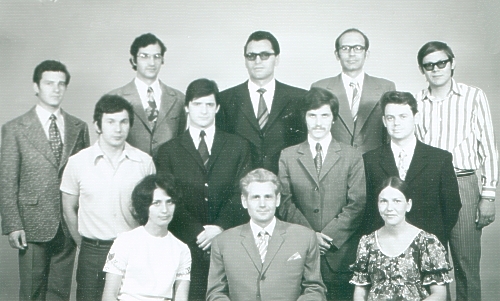
Основателите на катедрата
(отляво надясно, отгоре надолу)
Любомир Желязков, Ангел Смрикаров, Любомир Димов, Божидар Осиковски,
Володя Цонев,
Йордан Чаталов, Огнян Пенчев, Георги Георгиев, Емил Павликянов,
Свилена Недева, Васил Филипов, Стоянка Смрикарова
Йордан Чаталов, Огнян Пенчев, Георги Георгиев, Емил Павликянов,
Свилена Недева, Васил Филипов, Стоянка Смрикарова
Ръководството на катедрата е поверено последователно на доц.ктн
Емил Рац, доц.ктн Ирина Желязкова, доц.ктн Гитко Ангелов, гл.ас.Сима Навасардян и
гл.ас.Стоянка Смрикарова. Всеки от тях дава своя принос за развитието на
катедрата и оставя следа в нейната история. Определено може да се твърди, че в
своите действия ръководството на катедрата винаги се е ръководило от убеждението,
че една от основните предпоставки за поддържане и повишаване качеството на
учебната и научно-изследователска работа е материално-техническата база.
Благодарение на активното участие на катедрата в програмата TEMPUS стана възможно
тоталното преоборудване на учебните й лаборатории. Понастоящем във всяка от тях
има по 4-5 работни места с персонални компютри тип Pentium. Такива компютри са
инсталирани и в кабинетите на всички преподаватели. Компютрите са свързани в мрежа,
като е осигурен достъп и до INTERNET. Наличната в момента база позволява
изучаването както на най-съвременните едночипови микропроцесори, микрокомпютри и
транспютри, така и на DSP и FPGA. Понастоящем катедрата разполага и с две много
добре обзаведени лаборатории по мултимедийни системи - една учебна и една
научно-изследователска. Решен е и въпросът за свободния достъп на студентите до
катедрените ресурси.
През учебната 1997/98 г. катедрата разработи нови учебни планове
за подготовка на бакалаври и магистри. Същите отговарят на Наредбата на
Министерския съвет за единните държавни изисквания за придобиване на висше
образование по специалността "Компютърни системи и технологии" и са хармонизирани
с плановете на аналогични специалности в страните от ЕС. За немалка част от
специалните дисциплини вече са написани и издадени записки на лекции и ръководства
за упражнения. За нуждите на учебния процес са разработени близо 90 мултимедиийни
продукта.
Понастоящем в катедрата се работи по следните основни научни
направления:
- системи с изкуствен интелект;
- интелигентни системи за обучение;
- системи за автоматизация на телефонните услуги;
- системи за автоматизация на инженерния труд и научните изследвания.
През последните 4-5 години катедрата е на първо място в университета
по обем на сключените по линия на НИС договори за научно-изследователска, развойна
и внедрителска дейност. Резултатите от научно-изследователската работа на
преподаватели и студенти от катедрата са внедрени в Германия, Чехия, Унгария,
Русия, Литва, Беларус и в почти цяла България. От дълги години катедрата е на
едно от първите места и по броя на признатите и внедрени изобретения. Много от
разработките са намерили място в учебния процес. Катедрата е инициатор и
координатор на TEMPUS S_JEP-11392 "Restructuring degree courses in computing",
който обединява в един консорциум сродните катедри в ТУ-София, ТУ-Пловдив,
ТУ-Варна, ТУ-Габрово и в университетите в Плимът, Ливърпул, Берлин, Павиа и Янина.
Благодарение на този проект се изгражда инфраструктурата на една бъдеща академична
общност, на която престои да играе съществена роля в развитието на информационното
общество в България.
В заключение може да се отбележи, че за времето на своето
съществуване Катедрата по компютърни системи и технологии доказа способността си
да реагира адекватно на предизвикателствата на времето, в което живеем. В
Двадесет и първи век катедрата ще пристъпи с готовност за интегриране в
общоевропейските образователни структури.